Understanding Employment Contracts
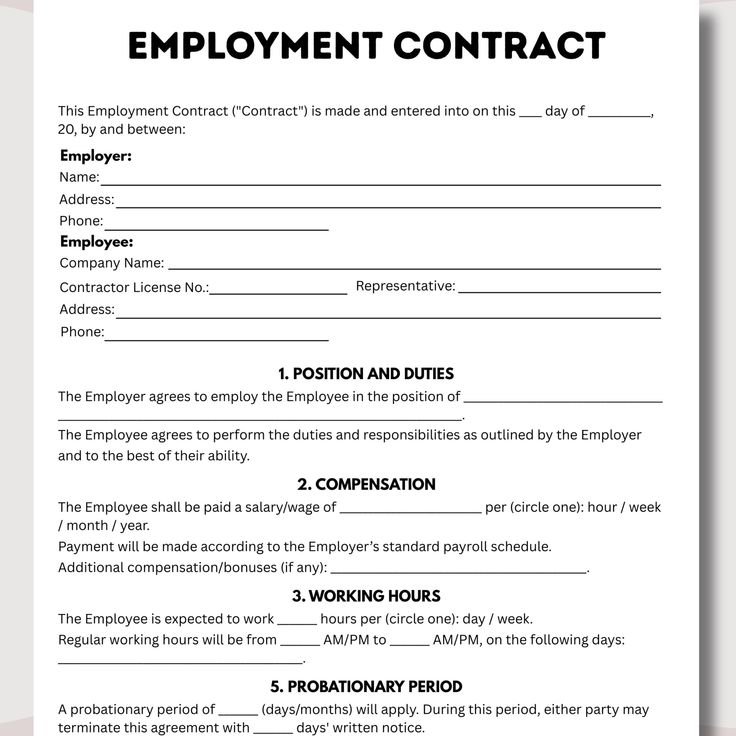
When hiring your first employee, a well-crafted employment contract serves as a fundamental document that outlines the terms and conditions of the working relationship. It is vital to recognize that an employment contract is not merely a formality; rather, it creates a legally binding agreement that protects the interests of both parties involved. A comprehensive contract should include several key components, each of which plays a crucial role in defining the expectations and responsibilities of the employee.
One of the primary elements to include in an employment contract is a detailed job description. This portion should specify the employee’s duties, responsibilities, and any essential qualifications required for the position. Clarity in job roles helps prevent misunderstandings that could arise later, thereby fostering a harmonious workplace environment. Another important component is the disclosure of salary and benefits. Clearly stating the compensation package, including any bonuses or other financial incentives, helps manage employee expectations and reduces the likelihood of disputes regarding pay.
Furthermore, incorporating confidentiality agreements can protect sensitive company information. Such agreements safeguard intellectual property, trade secrets, and proprietary information against unauthorized disclosure, ensuring the integrity of the business is maintained. Termination clauses are also essential; these outline the grounds for termination and the notice period required from either party. This provision helps protect against sudden job loss and ensures a fair process in the event of termination.
Ultimately, a well-structured employment contract serves as a tool for ensuring clarity in the employer-employee relationship. By addressing the fundamental aspects of employment, such as job description, salary, benefits, confidentiality, and termination, both parties can enter the working relationship with a clear understanding of their rights and obligations, thereby minimizing the potential for future conflicts.
Compliance with Employment Laws
When hiring your first employee, adhering to various employment laws and regulations is crucial to ensure a seamless integration into the workforce. Key legislation such as the Fair Labor Standards Act (FLSA) establishes standards for minimum wage, overtime pay, and child labor. It is essential for employers to familiarize themselves with these regulations to avoid legal issues and promote fair labor practices within the organization. Employers are responsible for maintaining accurate records of hours worked and wages paid, as non-compliance can lead to significant penalties.
In addition to the FLSA, compliance with Equal Employment Opportunity (EEO) laws is necessary to foster a diverse and inclusive workplace. These laws prohibit discrimination based on race, color, religion, sex, national origin, age, disability, or genetic information. Employers should implement clear hiring practices that ensure equal opportunity and prevent potential discrimination. This can include structured interviews, standardized job descriptions, and diversity training for the hiring team.
Beyond federal laws, businesses must also adhere to state-specific regulations that could vary from one jurisdiction to another. These regulations may encompass wage laws, workplace safety requirements, and employee rights related to paid leave or benefits. To navigate these complexities, employers should consult legal professionals or local government resources to obtain accurate and relevant information tailored to their business’s location.
To facilitate compliance, maintaining proper documentation is vital. This includes keeping records of hiring practices, employee classifications, payroll documents, and any information related to workplace safety training. Additionally, businesses should establish internal protocols for reporting and addressing workplace discrimination or harassment. By taking proactive measures to ensure a discrimination-free environment, employers can significantly enhance employee morale and retention. Overall, understanding and adhering to employment laws will lead to a more successful and legally compliant hiring process.
Navigating Tax and Payroll Responsibilities
When hiring your first employee, understanding tax and payroll responsibilities is crucial for compliance with federal and state regulations. The first step in this process is to obtain an Employer Identification Number (EIN) from the Internal Revenue Service (IRS). This unique identifier is necessary for reporting taxes and other employee-related documents. You can apply for an EIN online or via mail, and it is free of charge. The EIN will also be required when filing your payroll taxes and forms.
Next, it is essential to comprehend payroll taxes, which include federal income tax, Social Security, and Medicare taxes. As an employer, you are responsible for withholding the appropriate federal income taxes from your employee’s wages based on their W-4 form. Additionally, you will need to contribute an equal share to Social Security and Medicare taxes. Understanding how to calculate these taxes accurately will not only ensure compliance but also avoid potential penalties. Furthermore, state and local laws may impose additional tax obligations, which you should investigate depending on your location.
Filing payroll forms is another critical aspect of your responsibilities. Generally, you will need to file Form 941 quarterly, which reports the income taxes withheld, alongside Social Security and Medicare wages. Annually, you must submit Form W-2 to report employee wages and taxes withheld. Keeping accurate records of all payroll transactions and employee classification is vital for meeting these requirements. Misclassifying employees as independent contractors can lead to severe consequences, including fines and back taxes, so it is important to correctly identify employment status from the outset.
The Onboarding Process and Employee Rights
The onboarding process is a critical phase in establishing a productive relationship between a new employee and the organization. This phase not only includes administrative tasks but also sets the tone for the employee’s experience within the company. To ensure effective onboarding, organizations should develop a structured orientation program that introduces new hires to their roles and the company culture. This may involve welcome activities, an overview of company policies, and introductions to key team members. An organized orientation helps alleviate new employees’ anxiety, enabling them to acclimate more swiftly to their work environment.
Training is another vital component of the onboarding process. It is essential for equipping employees with the necessary skills and knowledge required for their specific roles. Training programs can be tailored to address both job-specific responsibilities and broader organizational goals, thereby enhancing overall productivity. Additionally, it is beneficial to continue training beyond the initial onboarding, as ongoing development opportunities foster employee engagement and professional growth.
Furthermore, integrating a new employee into the company culture is paramount to ensuring their long-term success and satisfaction. It is crucial to communicate the organization’s values and encourage participation in team-building activities. Establishing mentorship programs can also be a productive strategy, pairing new employees with seasoned staff to facilitate knowledge sharing and enhance comfort within the workplace.
Employee rights play a significant role in the onboarding process. It is essential to inform new hires about their rights concerning workplace discrimination, safety, and fair compensation. Employers should clearly communicate policies related to harassment and diversity, ensuring that their work environment promotes respect and inclusion. Highlighting the right to a safe working environment, compliant with applicable regulations, fosters not only legal compliance but also trust and morale among employees. By creating a comprehensive onboarding experience that includes these elements, employers can build a positive foundation for long-term engagement and success.